
Poker club roles
Poker app, club, union and agent: what is the difference?
The app supplies the software. The club organizes its group. A host runs a particular game, a union can connect clubs, and an agent acts as an intermediary. Here is who to ask when you need something done.
Sources
The editorial record
Sources
The linked app guides explain PokerBROS, ClubGG, Poker Now, Pokerrrr 2 and Suprema using their published sources and review dates. Check the terminology in the guide for your app; a role with the same name can work differently elsewhere.
Sources and evidence
- PokerBROS FAQ: joining, switching and club roles
- Publisher
- PokerBROS
- Source
- Developer documentation
- Evidence
- First-party claim
- Accessed
- Oct 11, 2026
- Reviewed
- Review date not recorded
 WhatsApp
 Facebook
 X
XWho can actually help with your question?
The person who sent you a Club ID may not own the club. The person hosting tonight’s room may not work for the app. Knowing the difference saves you a round of messages to the wrong people.
An app that will not install is an app-support question. A club request that needs approval is a membership question. A private room with the wrong settings is a question for its host.
The app provides the software
The app is the software or browser product you open. Its developer or operator owns the official downloads, supported devices, account system, app-wide features, rules and updates.
One app can offer more than one way to play. A feature listed for the app is not automatically enabled in every club, room or account.
Guides & glossary
Build your poker-app know-how.
Get new guides, useful explanations and glossary additions when we publish them.
An operator runs the named product or service
Operator means the company or organization responsible for the particular app, club, network or service being discussed.
The word needs context. An app operator does not necessarily run the independent clubs inside its software. A club operator is not necessarily the app developer.
Look for the published organization name and the service it runs. A familiar logo, similar name or matching email domain is not enough on its own.
A club is the group you join
A club is a named group inside a club-based product. It can have administrators, members, a Club ID, invitations, games, schedules and table settings, plus relationships with a union or agent.
Want a particular game? Check that club, not just the app. Another club’s full tables or format list do not tell you what this one is running.
The host sets up a particular game
A host creates or manages a room or game and shares its link, name or game code with the players.
The host can use the settings that product provides. Organizing your game does not automatically make the host a club owner, agent or member of the app’s support team.
Poker Now and Pokerrrr 2 both offer host-oriented play, but their browser, app, account and room arrangements differ. Use instructions for the product your group actually chose.
A union connects clubs or game pools
A union or network can connect several clubs, game pools or administrative arrangements within a product.
Shared membership does not mean every club has the same owner, contact, rules or active tables. A network name is not a substitute for checking the club you plan to join.
You may also see league or another label. Check what that app means by it instead of carrying a definition over from a different app.
An agent has a specific role—not every role
An agent acts as an intermediary for a player, club, operator or network. What the person can do depends on the actual relationship.
Someone offering help is not automatically the app operator, club owner, union manager or official support team.
For example, PokerBROS’s FAQ gives club managers the power to add or remove players. An agent must ask the club to do that. If your membership request is pending, ask who can approve it rather than assuming anyone called an agent has that permission.
Someone says an agent is trusted. What backs that up?
Start with checkable details: a consistent public identity, a current contact, a clearly stated role and recognition of that role by the named club or operator. Check whether later changes or corrections are visible.
An old account, familiar name, glowing testimonial or lack of complaints is not a guarantee of reliability.
We do not turn those signals into a trusted-agent score or a claim of financial reliability. If the role is not confirmed or the sources disagree, that is the detail the listing should say.
The Club ID is a number, not a person
A Club ID helps an app locate a club. An invitation or join link may lead to a club, a room or an application step. None of those is the person running it.
Check the app and club name before using the value. Keep a private room link or personal invitation within its intended group.
A matching ID does not confirm who operates the club or whether the person messaging you represents it.
A public handle still needs a clear role
An email address, website, Telegram handle, WhatsApp number or Discord account can be public without representing every service shown in its name or logo.
Check who supplied the contact and what it handles. A directory listing is not automatically confirmation from the club.
Old posts and forwarded messages can outlive someone’s role. Before relying on or reposting the details, check that the contact is still public and still represents the same club.
Put the labels to work
Your friend sends a PokerBROS Club ID. PokerBROS is the app; the number points to a club. The person who sent it may be another member, not the owner. A pending membership request needs the club’s approval process, not a new app download.
Your group plays in a Poker Now room. Poker Now supplies the software and your host manages that game. Ask the host about room settings; do not assume the host can fix the website’s account system.
These examples explain who handles what. They do not recommend a particular club, agent or host.
See how the roles connect
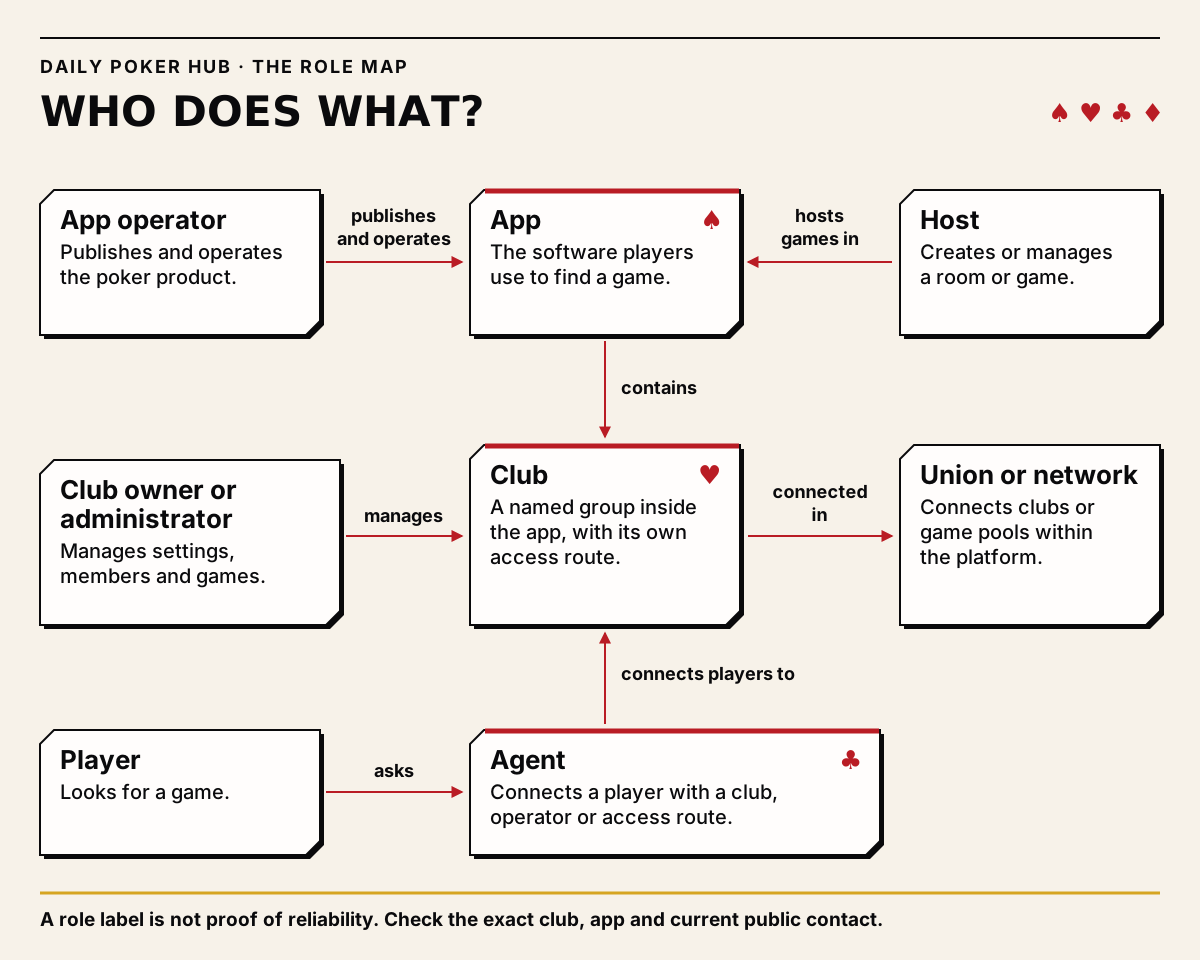
When the story does not add up
The club page names one app, but the ID or link belongs to another.
The same ID or contact is attached to clubs that have not been matched to one identity.
An agent claims a role that no current club source supports.
A privately hosted room is described as a public table run by the app operator.
Someone promises a club’s game or schedule only because the app supports that format.
A contact asks you to send passwords, one-time codes, recovery details, identity documents or access to your account or device.
The only support is an old post, copied listing, forwarded message or search snippet.
Pause on the mismatch and check who owns the detail. Confusion is a reason to ask a better question, not proof of misconduct.
Who does what, at a glance
- App
The software you open. Its developer does not necessarily operate the clubs inside it.
- Operator
The organization running the named app, club or service. Check which one the word refers to.
- Club
The group you join inside a club-based product, with its own games and administration.
- Host
The organizer of a particular room or game, not automatically the app or club owner.
- Union or network
A connection between clubs or game pools. It does not make every club’s contact or rules identical.
- Agent
An intermediary with a particular represented role. The role needs checking; the label is not a reliability guarantee.
- Club ID or invitation
A way to find or apply to a destination, not proof of who runs it.
- Public contact
A way to reach a named person, organization or support role. A logo alone does not establish that role.
What this role guide does not settle
This page explains identities and relationships, not app prices, rake, fees, bonuses, funding or payment instructions, withdrawals, solvency, payment history, expected winnings or profitability.
Private player details, account information, room invitations, messages, credentials and identity documents stay private.
Cheating reports, restrictions, disputes and live-table information need their own sources. None can be settled by calling someone an operator or agent.